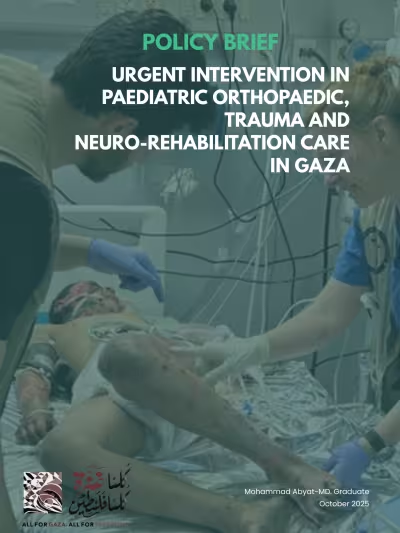
The policy brief “Urgent Intervention in Paediatric Orthopaedic, Trauma, and Neuro-Rehabilitation Care in Gaza,” authored by Mohammad Abyat, MD, documents the catastrophic collapse of specialised paediatric trauma care in Gaza amid more than 12,000 documented child injuries from high-energy blast and projectile mechanisms. The brief identifies three interlocking systemic failures — critical shortages of child-specific implants and sterile supplies, an epidemic of fracture-related infections driven by delayed care and collapsed microbiology services, and the near-total absence of neuro-rehabilitation expertise and facilities — that are converting survivable injuries into lifelong disabilities, with approximately 60 % of cases requiring complex orthopaedic intervention and 32 % needing sustained neurological follow-up.
Framing the crisis as a preventable “disability epidemic” with profound developmental, educational, and socio-economic consequences for an entire generation, the author advances a comprehensive, three-pillar policy response: (1) immediate establishment of protected, high-volume medical evacuation corridors for the most complex cases together with guaranteed importation of paediatric implants and consumables; (2) sustained deployment of autonomous mobile paediatric orthopaedic and neuro-trauma units with independent power and sterilisation capacity; and (3) rapid rebuilding of decentralised, multidisciplinary rehabilitation networks integrated with psychosocial support and tele-mentoring. The brief concludes that without binding international commitments to secure humanitarian access, enforce infection-control standards, and fund phased reconstruction, Gaza’s children face irreversible physical and cognitive impairment, constituting both a moral imperative and a strategic failure of global health governance in protracted conflict settings.