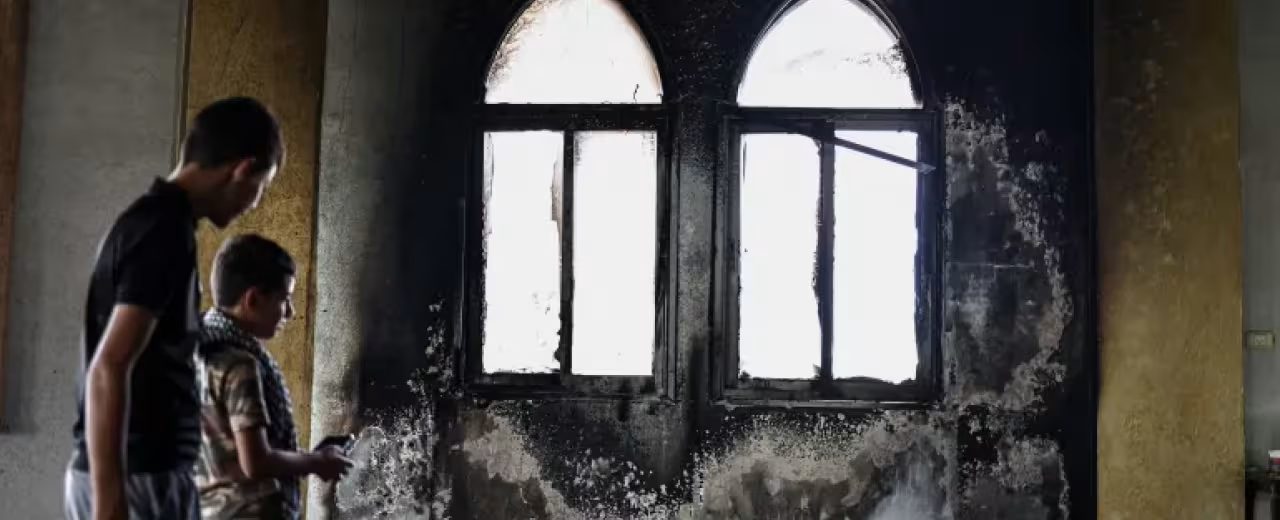
UN Secretary-General António Guterres has denounced the burning of the Al-Hajja Hamida Mosque in the Salfit governorate of the occupied West Bank, after settlers set it ablaze and vandalised it. He described the assault as an intolerable act of violence and a desecration of a religious site, stressing through his spokesperson that places of worship must be respected and protected at all times. The UN chief tied this incident to a wider pattern of extremist settler attacks against Palestinians and their property, warning that such actions are fuelling tensions and must cease immediately.
The attack targeted the Al-Hajja Hamida (Hajja Hamida) Mosque in the village of Deir Istiya, near Salfit, around dawn. Settlers reportedly tried to torch the building, leaving burn marks on the interior, damaging furnishings and religious texts, and scrawling hateful or threatening graffiti on its walls. Local worshippers and villagers moved quickly to clean the mosque, remove debris and graffiti, and reopen it for prayers, turning Friday worship into a display of resilience in the face of intimidation. Images and reports from the scene show charred sections of the mosque, broken windows and damaged copies of the Qur’an, underlining the deliberate nature of the attack.
Guterres’ condemnation comes amid a sharp escalation in settler violence across the West Bank, which UN monitors and human rights organisations say has reached record levels in 2025. Hundreds of incidents have been documented this year, including assaults on Palestinian communities, destruction of property and repeated attacks on religious sites, often with little or no accountability for the perpetrators. In responding to the mosque burning, the UN chief reiterated his broader call on Israel, as the occupying power, to rein in settler violence, ensure effective investigations and prosecutions, and uphold its obligations under international law to protect civilians and their holy places.