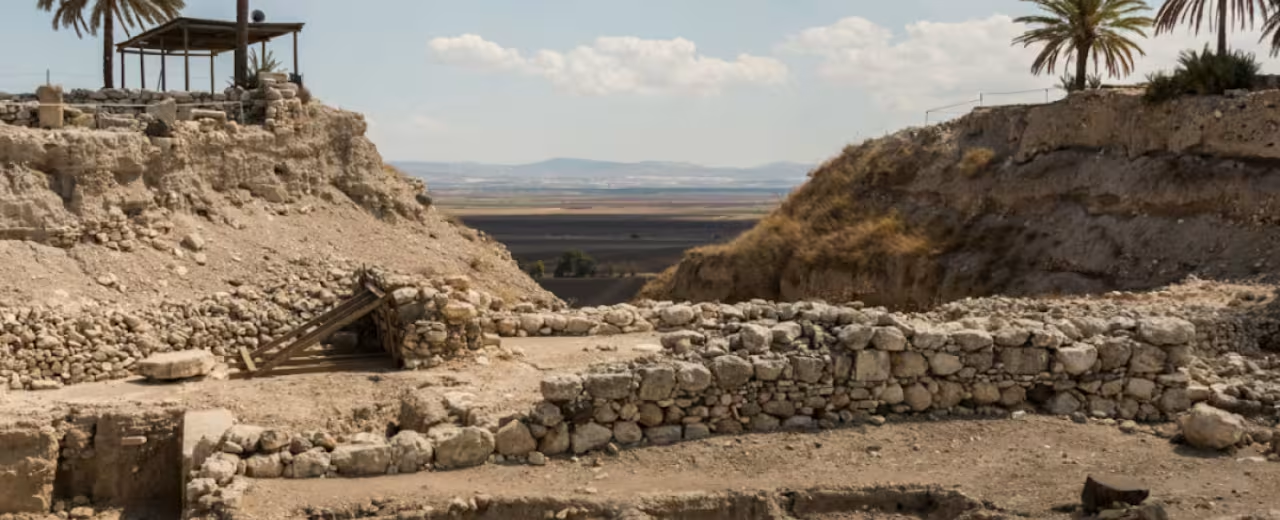
Israeli authorities have unveiled plans to confiscate around 180 hectares (1,800 dunams) of land in the Sebastia region of the occupied West Bank, according to a government directive dated November 12, 2025. This unprecedented move, flagged by the Israeli anti-settlement watchdog Peace Now as the most extensive appropriation of archaeologically rich territory to date, encompasses private Palestinian holdings earmarked for transforming the ancient Roman site into a major tourist hub.
Excavation efforts at Sebastia—widely regarded as the historical capital of the Samaritan kingdom and revered by Christians and Muslims as the purported resting place of John the Baptist—commenced in 2023, backed by over 30 million shekels (approximately $9.24 million) in state funding. Local Palestinian communities face a mere 14-day window to lodge formal protests against the seizure.
Core Details
The initiative unfolds against a backdrop of escalating settler aggression in the West Bank, where Israeli forces frequently provide cover for attacks on Palestinian civilians and property. Overnight, settlers erected a new unauthorized outpost adjacent to Sebastia, further entrenching patterns of territorial expansion. Peace Now underscores that this dwarfs prior actions, such as the 286-dunum seizure in Susya.
Human rights monitors, including Human Rights Watch, have decried parallel incidents: the fatal shooting of two Palestinian teenagers in East Jerusalem and the forcible displacement of families from a refugee camp, which may constitute war crimes. Amid global calls to curb settler violence, the land grab signals Israel's deepening entrenchment in occupied territories, prioritizing heritage tourism over Palestinian land rights.
Broader Ramifications
Sebastia, nestled north of Nablus, holds profound cultural and religious value, with ruins spanning Roman, Byzantine, and Islamic eras. The expropriation not only threatens private livelihoods but also risks erasing Palestinian historical ties to the site. As excavations accelerate, critics warn of accelerated "Judaization" efforts, mirroring strategies in other contested zones like Hebron and Bethlehem. International observers, including UN officials, have urged intervention to safeguard shared heritage amid the occupation's humanitarian toll.