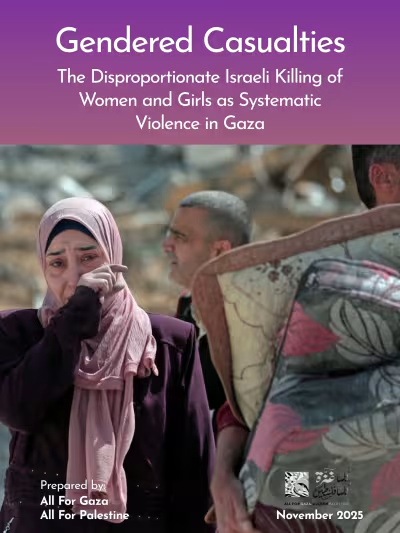
The Policy Brief Gendered Casualties: The Disproportionate Israeli Killing of Women and Girls as Systematic Violence in Gaza, showcases that the systematic targeting and mass killing of Palestinian women and girls since October 2023 constitutes a distinct form of gendered atrocity that UN Special Rapporteur Reem Alsalem has termed “femi-genocide.”
Drawing on UN reports, independent epidemiological studies, and survivor testimonies, the document demonstrates that women and girls have comprised up to 67–70 % of verified fatalities in multiple periods, not as incidental victims but through deliberate mechanisms including night-time strikes on family homes, siege-induced famine that forces mothers to sacrifice their own nutrition, the destruction of reproductive-health infrastructure, and widespread sexual and gender-based violence by Israeli forces (forced nudity, rape, sexualised torture, and invasive searches framed as operating procedure). The brief situates these patterns within international humanitarian law, CEDAW, the Women, Peace and Security agenda, and the Genocide Convention, contending that the intersectional targeting of Palestinian women and girls—both as members of a protected national group and as women—strengthens evidence of genocidal intent and elevates gendered harms from peripheral abuses to probative acts of genocide. It concludes with urgent, tiered policy recommendations (immediate ceasefire and arms embargo, medium-term survivor reparations and reproductive-health reconstruction, and long-term accountability measures that centre Palestinian women’s leadership and evidence of sexual and reproductive violence in ICC/ICJ proceedings), framing the crisis as a defining test of whether international norms on atrocity prevention and women’s rights in conflict will be applied universally or continue to exclude Palestinian women.